


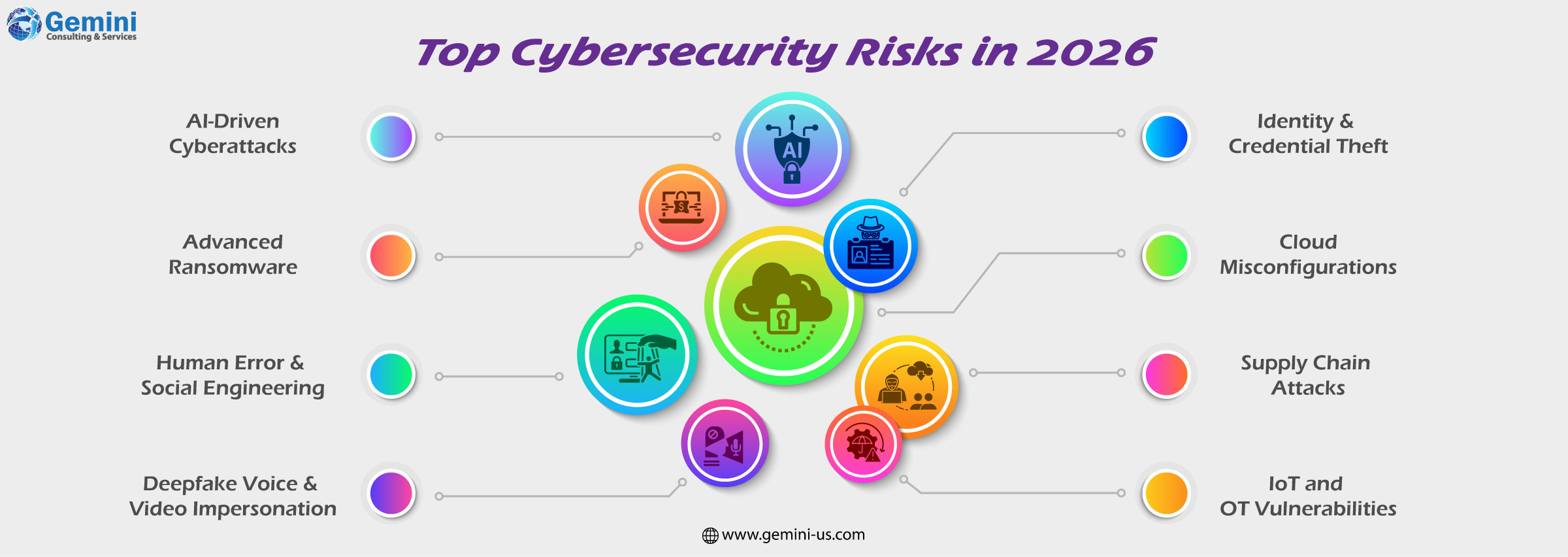
Cybersecurity is becoming one of the most important priorities for every modern business. As companies continue to shift toward digital systems, cloud platforms, and remote operations, the number of cyber threats is also increasing rapidly. In 2026, organizations will face more advanced attacks, stricter regulations, and greater risks to data privacy than ever before. Understanding these challenges is essential for building strong protection strategies and ensuring long-term business security in an increasingly connected world.
Rising AI-Powered Cyber Attacks
AI-Driven Phishing Attacks
Artificial intelligence is making phishing attacks more advanced and harder to detect. Cybercriminals now use AI tools to create highly personalized emails that look completely legitimate. These messages often mimic real communication styles, making employees more likely to click harmful links or share sensitive data. As a result, companies must prepare for smarter phishing campaigns that bypass traditional awareness training and basic email filters.
Automated Malware Generation
AI is also being used to generate malware automatically, allowing attackers to produce new variants faster than security systems can respond. These automated threats can change their structure continuously, making them difficult for antivirus software to detect. This increases the pressure on companies to adopt advanced threat detection systems powered by behavioral analysis and machine learning.
Deepfake-Based Social Engineering
Deepfake technology is becoming a serious cybersecurity risk. Attackers can now create realistic fake audio or video messages of executives or employees to manipulate staff into transferring funds or sharing confidential data. This type of attack targets trust rather than systems, making it extremely dangerous for corporate communication channels.
Cloud Security and Data Protection Risks
Misconfigured Cloud Environments
One of the biggest cybersecurity challenges in 2026 is misconfigured cloud infrastructure. Many companies rely on cloud services for storage and operations, but incorrect settings can expose sensitive data to the public internet. These mistakes often go unnoticed until a breach occurs, highlighting the need for strong configuration management and continuous monitoring.
Data Leakage Across Platforms
As businesses use multiple cloud platforms and SaaS applications, data often moves between systems. Without proper controls, this creates opportunities for data leakage. Sensitive information may be accidentally exposed or accessed by unauthorized users, making data governance a critical priority for organizations of all sizes.
Weak Access Controls
Weak identity and access management systems remain a major security gap. If employees have excessive permissions or outdated access rights, attackers can exploit these weaknesses to move through systems unnoticed. Companies must implement strict access control policies to ensure that only authorized users can reach critical data.
Ransomware and Advanced Persistent Threats
Evolving Ransomware Strategies
Ransomware attacks are becoming more aggressive and targeted. Instead of randomly attacking systems, cybercriminals now focus on high-value organizations and critical infrastructure. These attacks often involve encrypting data and demanding large ransom payments, creating serious financial and operational risks for companies.
Double and Triple Extortion Tactics
Modern ransomware groups are no longer satisfied with just encrypting data. They also steal sensitive information and threaten to leak it publicly if the ransom is not paid. Some even contact customers or partners directly, increasing pressure on victims. This multi-layered extortion approach makes recovery more complex and damaging.
Long-Term System Infiltration
Advanced persistent threats (APTs) involve attackers silently infiltrating systems for long periods without detection. They gather intelligence, monitor activities, and slowly expand access within the network. This makes early detection extremely difficult and requires continuous monitoring and advanced threat intelligence systems.
Human-Centric Cybersecurity Risks
Employee Security Awareness Gaps
Employees remain one of the weakest links in cybersecurity. Even with training programs, many users still fall victim to phishing emails, weak passwords, and social engineering attacks. This creates entry points for attackers who rely on human error rather than technical vulnerabilities.
Insider Threats and Data Misuse
Insider threats, whether intentional or accidental, are a growing concern. Employees with access to sensitive systems may misuse data or unknowingly expose it through careless actions. Organizations must implement monitoring systems that detect unusual behavior without violating privacy policies.
Weak Password and Authentication Practices
Weak password habits continue to expose businesses to cyber risks. Many employees reuse passwords across platforms or choose simple credentials that are easy to guess. Without strong authentication systems like multi-factor authentication, companies remain vulnerable to unauthorized access.
FAQs
1. What is the biggest cybersecurity challenge in 2026?
AI-powered cyber attacks and ransomware threats are expected to be among the biggest challenges for companies.
2. Why is cloud security important for businesses?
Cloud security is important because misconfigurations and weak access controls can expose sensitive company data.
3. How do ransomware attacks affect companies?
Ransomware can lock critical systems, steal data, and demand large payments for recovery.
4. What role do employees play in cybersecurity risks?
Employees often unintentionally cause security breaches through phishing attacks or weak password practices.
5. How can companies improve cybersecurity in 2026?
Companies can improve security by using advanced threat detection, strong access controls, and regular employee training.
Conclusion
Cybersecurity challenges in 2026 are becoming more complex, intelligent, and damaging for businesses worldwide. From AI-powered attacks and cloud security risks to ransomware and human errors, organizations must prepare for a wide range of threats. Companies that invest in strong security systems, employee awareness, and modern protection strategies will be better positioned to defend their data and operations in the evolving digital landscape.
